The Moment Everything Changed
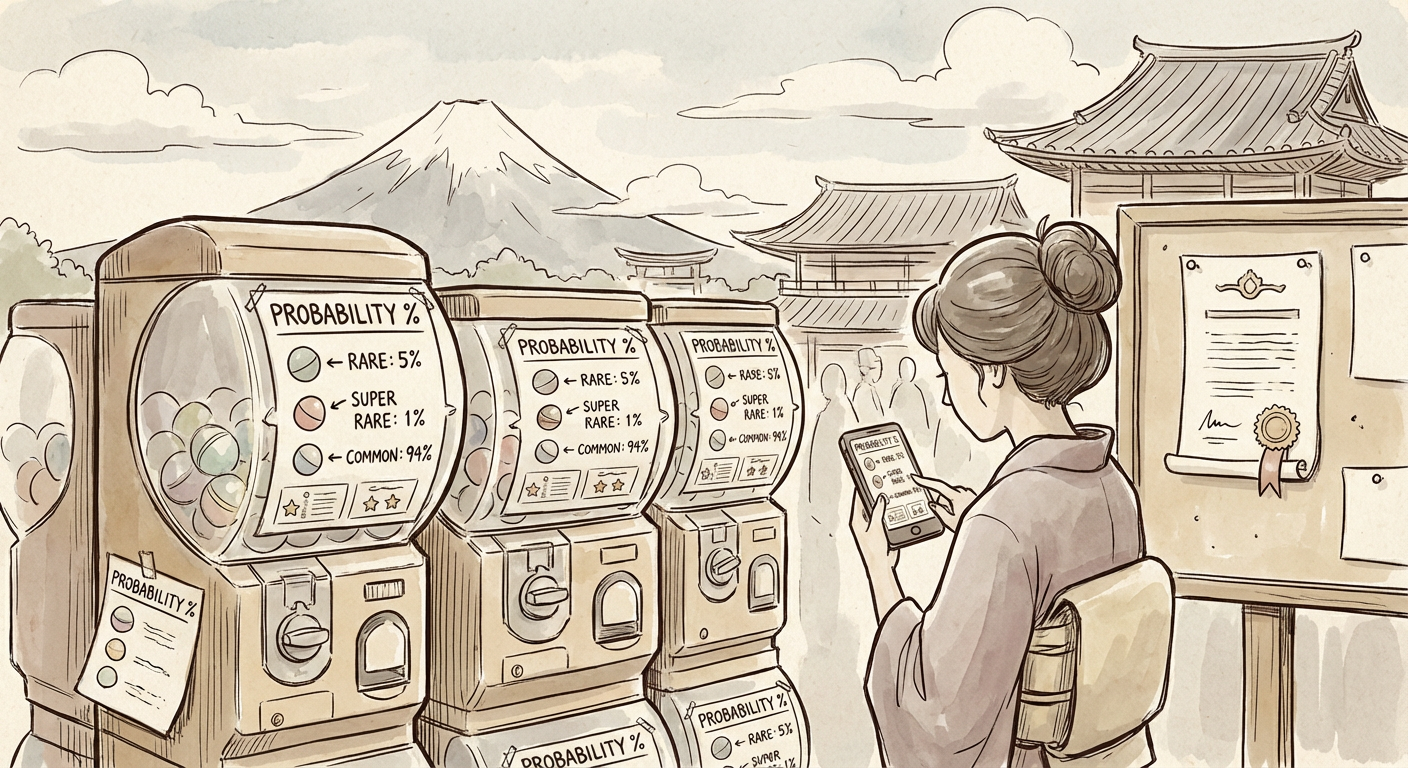
Japan just dropped the hammer. In mid-2025, the Consumer Affairs Agency finalized updated gacha regulation guidelines that are fundamentally reshaping how mobile games operate worldwide. We’re not talking about soft suggestions here. These regulations mandate explicit probability displays for all banner tiers, including sub-rarity breakdowns, across every storefront operating in Japan. This is the big one. This is the regulatory moment the industry has been dreading since loot boxes became a billion-dollar business.

What makes this particularly significant is the global scale of the impact. When Japan moves, the entire gacha ecosystem feels it. These aren’t local rules that apply only to Japanese players. Game companies face a choice: either implement these transparency standards worldwide or maintain separate systems by region, which is logistically and financially messy. Most studios are choosing the path of least resistance, which means the whole planet is about to see exactly what odds they’ve been swiping for.
The Money Behind the Curtain
Let’s talk about what’s actually at stake financially. According to Sensor Tower Mobile Gaming Revenue Report, the top ten gacha mobile games collectively generated 8.7 billion dollars during 2024. That’s not including mid-tier games or the endless roster of titles that make millions but don’t crack the top ten. Japan alone represented approximately 28 percent of that massive revenue pie. This isn’t spare change we’re talking about. This is existential money for these studios.
When you look at individual titles, the scale becomes even more staggering. HoYoverse’s anniversary report showed that Genshin Impact’s global player base exceeded 100 million registered accounts as of mid-2025. A hundred million people who downloaded and engaged with one of the most successful gacha games ever made. Now imagine having to show all 100 million of those players exactly what their odds actually are, in real numbers they can’t ignore or misinterpret. That’s a whole different conversation.
The First Wave of Responses
Some studios are actually leaning into this. Honkai: Star Rail introduced a guarantee tracker UI update in Version 3.0 in early 2026 that shows players their exact pull distance from both soft and hard pity thresholds. This wasn’t some revolutionary feature. It’s actually something the community had been requesting for years. But suddenly, when regulatory pressure arrives, it becomes possible. The official Honkai Star Rail official patch notes framed this as a player experience improvement, and honestly, they’re not wrong. Knowing exactly where you stand is objectively better than gambling blind.
But not every studio is responding with grace. South Korea’s Game Rating and Administration Committee issued fines totaling approximately 2.3 million dollars to three mobile publishers in Q3 2025 for undisclosed rate manipulation on limited banners. Translation: they got caught lying about their odds. These weren’t small infractions. These were deliberate deceptions. And when regulators started bringing the hammer, the excuses evaporated.
What This Means for Your Wallet
Here’s where I need to be direct with you. Transparency doesn’t automatically mean better rates. A game showing you it has a 0.3 percent chance to pull a five-star isn’t suddenly generous because you can see the number. But transparency does mean you can make informed decisions. You’re no longer flying blind. You can look at those odds, do the math, figure out how much money you’d need to spend for a realistic chance at what you want, and then decide if that’s reasonable for your entertainment budget.
The real consumer win here is that you can now compare apples to apples. If one game shows a 0.8 percent rate and another shows 0.3 percent, you know exactly which one respects your money more. You can calculate soft pity distances, understand rate-up mechanics, and spot when a studio is burying the actual odds under confusing language. That’s power. That’s the power the industry has been trying to keep away from players since day one.
The Industry Has to Evolve or Collapse
Some studios will adapt and thrive. Others will fold because their entire monetization model was predicated on player confusion. The games that were already offering reasonable rates and honest mechanics are in the strongest position. The ones hanging their entire business model on obfuscation and psychological manipulation are facing a genuine crisis. That’s not sad. That’s overdue.
What we’re watching is an industry reckoning that was always inevitable. Gacha mechanics were always going to face regulatory scrutiny. The question was never if, but when. Japan answered that question in 2025. Now every studio that wants to operate there and maintain their global player base has to operate in the light. Some will genuinely innovate their monetization models to be more fair. Others will raise prices elsewhere to compensate. Most will find a middle ground that’s still profitable but actually respects their players enough to show them the math.
If you’ve been hesitant about gacha games because the whole system felt shady, this is genuinely worth revisiting now. The games that earn your trust going forward will be the ones that actually operate with transparency. And if you’re already spending money on these titles, you deserve to know exactly what you’re paying for. What gacha games have genuinely impressed you with how they handle rates and transparency? Drop your takes in the comments.