The Numbers Tell a Story: When Esports Stopped Shrinking
If you’ve been grinding ranked for the past few years, you probably noticed something shift in 2025. The doom-scrolling about “esports being dead” finally stopped. The conversation changed. Instead of endless think pieces about viewership declining, we started seeing headlines about record-breaking tournaments and industry recovery. This wasn’t hype — it was actual, measurable momentum returning to competitive gaming.

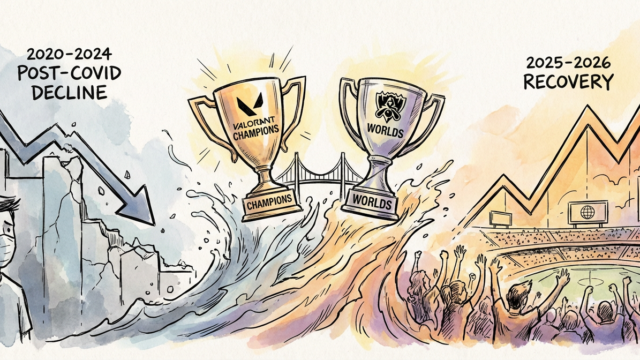
Let’s look at what happened. Valorant Champions 2025 pulled 1.85 million concurrent viewers across Twitch and YouTube combined when it went down in São Paulo. That’s not just good for Valorant — that’s a 12% increase over the previous year’s event. More importantly, League of Legends Worlds 2025 in London hit 6.4 million peak concurrent viewers globally, including the massive Chinese viewership on Douyu and Huya. That number matters because it broke a three-year losing streak. After years of steady decline, the two biggest esports franchises in the world simultaneously reversed course. That doesn’t happen by accident.
The data from Esports Charts Viewership Analytics confirms what anyone actually paying attention could feel: esports viewership stopped being a concern and became an opportunity again. The broader industry revenue hit $1.1 billion in 2025, the first time since 2022 that we broke that ceiling. That’s primarily sponsorship recovery and venue ticket sales, meaning the ecosystem is strengthening at multiple levels at once.
The Access Problem Got Solved, and That Changed Everything
Here’s what most people miss when they analyze viewership recovery: it wasn’t just about better tournaments or better marketing. It was about removing friction. In 2025, Riot Games signed a broadcast deal with Amazon Prime Video that extended Valorant Champions Tour coverage to ten new regional markets. Think about what that means practically. You’re a fan in Southeast Asia, Latin America, or Eastern Europe — markets historically underserved by esports broadcasts — and suddenly the biggest tournaments are available where you already spend your time streaming. That’s not a small change. That’s the difference between watching something that requires three different browser tabs versus clicking one app you already have open.
Accessibility drives viewership. Viewership drives sponsorship interest. Sponsorship interest drives production budgets. Better production draws better players and creates better stories. That’s the positive feedback loop that broke after the COVID bump wore off. Now it’s running again, and the proof is in how many regions are actually investing in talent pipelines instead of just hoping players emerge.
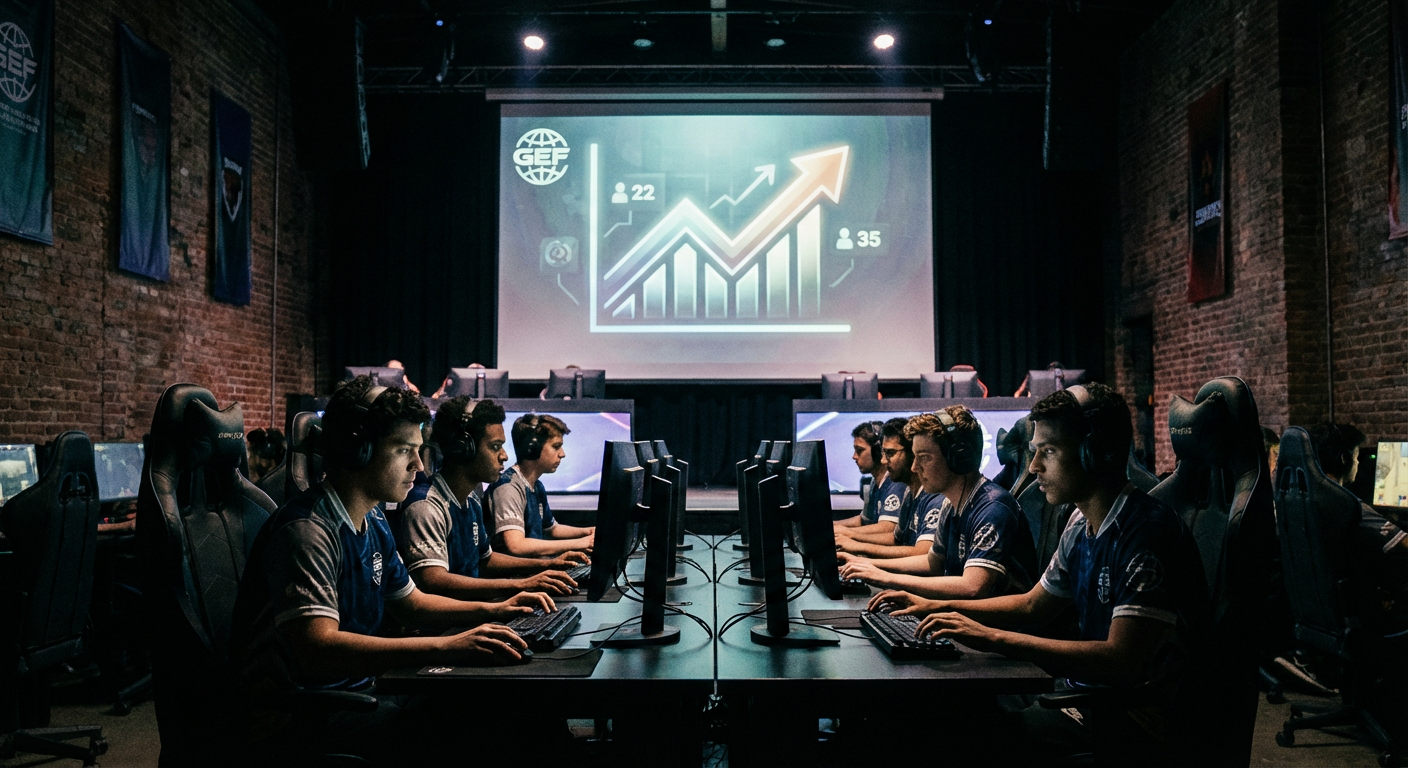
The Global Esports Federation 2026 Industry Overview reported that 35 member national federations are actively funding amateur grassroots programs as of January 2026. Not a huge number in absolute terms, but it’s up from 22 in 2023. More critically, these aren’t just wealthy Western countries anymore. You’re seeing funding commitments from regions that were basically esports spectators five years ago. When governments start writing checks for competitive gaming infrastructure, you know the legitimacy conversation has shifted for real.
What Championship Success Actually Built: Sustainable Structure
The Valorant Champions and Worlds recoveries matter because they happened at the championship level, where the real money and attention concentrate. It’s easy to pull numbers for one tournament if you have viral moments or exceptional marketing. Sustaining growth year-over-year at the literal peak of your esports hierarchy is something else entirely. That tells you the foundation is actually solid.
Think about what makes those events work. Valorant Champions brought 12 teams competing for first-place money at a venue in São Paulo. Worlds brought 12 teams fighting through one of the most intensive playoffs in esports. These are structured, repeatable formats that have become genuinely compelling television. The stories build through the entire competitive year. A player climbs through Valorant Challengers knowing exactly what the pathway looks like. A region’s League team grinds through splits knowing the roadmap to Worlds is transparent and achievable. That predictability, combined with genuine competitive stakes, is what separates events that happen once versus events that actually matter.
When championship viewership recovers while regional and grassroots funding simultaneously increases, it means different segments of the competitive ecosystem are reinforcing each other. Someone watching Worlds gets inspired. They want to improve their rank. They join a local amateur scene, which now exists in more places because federations are funding programs. That amateur scene finds a pathway to professional opportunities. The whole structure tightens. That’s exactly what you want to see.
The Practical Reality: What This Means If You Actually Play
Look, I get it. You’re probably more interested in what this means for your competitive journey than industry metrics. Honest answer: the recovery matters because investment is flowing back into the ecosystem. Better production values at tournaments. More regional qualifiers with actual prize pools. Sponsorship deals that make professional careers somewhat sustainable beyond the absolute top players. The infrastructure that was frankly falling apart two years ago is getting rebuilt.
If you’re grinding ranked right now, the timing is genuinely good. More viewers watching professional matches means more recruitment from teams looking to build out academy systems and develop talent. More sponsorship money means more orgs can afford to pay players at intermediate levels, not just the franchise-locked teams. More regional tournaments with real structure means your path from ranked success to professional competition is clearer than it’s been in years.
That said, none of this changes the fundamentals. You still need to improve your mechanics. You still need to understand your agent pool and how matchups work. You still need to grind through the mental challenge of ranked consistency. But the ecosystem recovery means the reward structure is actually aligned with that effort now. The tournaments you’re watching as inspiration actually represent a viable career path, not just entertainment.
Building Forward From Here
The Valorant Champions and Worlds recovery in 2025-2026 created a turning point because it proved esports viewership wasn’t actually dead — it was just recalibrating. Post-COVID numbers were unrealistic. Decline was inevitable. But the floor of what sustainable esports viewership looks like turned out to be much higher than the doom-sayers predicted. We’re seeing that story play out in real time.
The next eighteen months matter because they’ll determine whether this recovery becomes a new baseline or another temporary spike. Every championship performance, every regional investment, every viewer that tunes in because the broadcast is now accessible on their preferred platform — those moments compound. They build legitimacy, which builds infrastructure, which builds sustainable careers.
What are you seeing in your own competitive community? Has the industry recovery actually translated into better tournaments, more players, or more investment where you are? Hit me up in the comments and let’s talk about what’s happening in your scene.