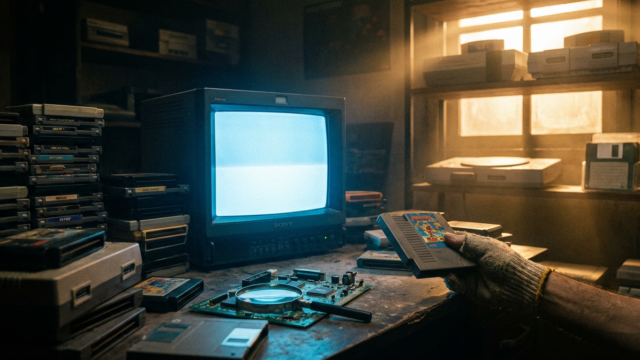
S-Tier: The Unavoidable Truth About Game Extinction
The numbers don’t lie, and they’re brutal. Research from the Video Game History Foundation shows that 87 percent of classic video games have vanished completely. Gone. You can’t buy them anywhere legally, you can’t play them through official channels, they just don’t exist anymore in any accessible way. This isn’t some activist spinning numbers to make a point—this is documented cultural extinction happening right now, at a scale that would have people screaming bloody murder if we were talking about movies, books, or music from the same time periods.
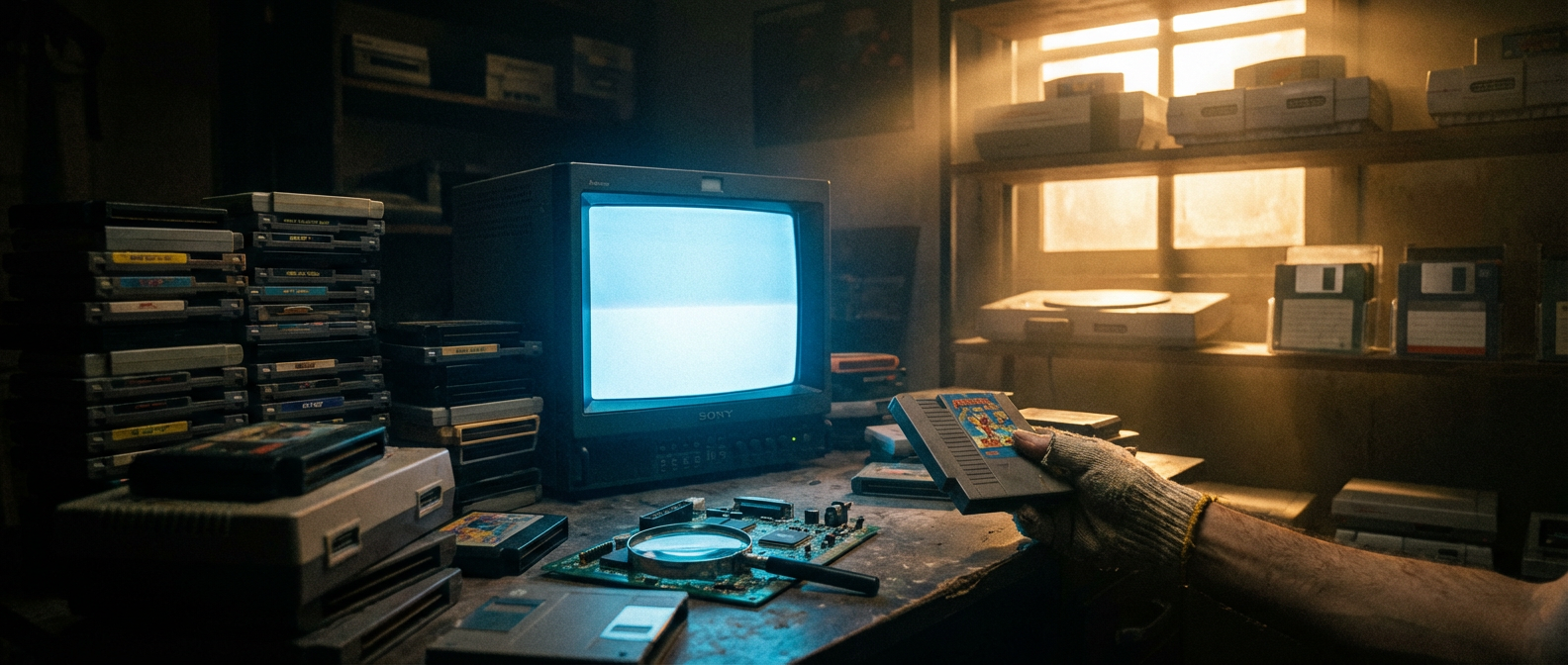
When critics say ROM distribution breaks copyright law, sure, they’re technically right. But they’re completely missing the bigger disaster here. These games aren’t disappearing because of piracy. They’re disappearing because the companies that own them have completely abandoned them, leaving zero legal ways to access them. The preservation crisis sits in S-tier because it’s bigger than every other argument in this whole debate. You can’t protect intellectual property that doesn’t exist in any accessible form anymore. You can’t build a gaming culture on a pile of digital ash.
Think about how insane this really is. Video games are the biggest entertainment medium right now. Bigger than movies and music combined in terms of revenue. We’re not just losing some old software here, we’re systematically erasing the evolutionary history of an art form that defines modern entertainment. Future game developers, historians, and players are going to inherit a medium with massive holes in its timeline. ROM preservation efforts are the only thing standing between us and those holes becoming permanent.

A-Tier: Legal Frameworks That Actually Work
The Internet Archive games collection is exactly how preservation should work when you get the legal framework right. They’re hosting thousands of playable vintage games under specific DMCA exemptions, proving that legitimate preservation doesn’t have to be some lawless free-for-all. They do rigorous documentation and stick carefully to copyright exceptions that were designed specifically for educational and historical purposes.
What’s even better is that the Library of Congress expanded and renewed its game preservation exemptions in 2024. This creates clearer paths for institutions to maintain playable archives of aging software. These exemptions recognize what preservationists have been saying for decades: interactive media is different from regular copyright materials because you can’t separate the experience from the technology. You can’t preserve a video game by keeping the code on a shelf somewhere. Preservation means being able to actually run and experience the software as it was meant to be played.
I put institutional preservation efforts in A-tier because they give us sustainable, defensible models for keeping gaming history alive. The Internet Archive proves that preservation advocates don’t have to choose between respecting intellectual property and maintaining cultural heritage. Smart legal frameworks can handle both when they’re actually designed with preservation in mind instead of just commercial interests.
B-Tier: The Hardware Renaissance and Its Limitations
The explosion of premium emulation hardware is pretty fascinating as a middle ground approach. Companies like Analogue and the open-source MiSTer FPGA project have created this whole thriving market for authentic vintage gaming experiences without getting into questionable software distribution. These devices recreate original hardware behavior at the silicon level, giving you near-perfect compatibility with original cartridges and discs while supporting modern displays and quality-of-life improvements.
FPGA-based solutions earn B-tier placement because they solve the technical preservation challenge brilliantly while avoiding most legal complications entirely. When you’re running an original cartridge on hardware that precisely mimics vintage silicon behavior, the copyright concerns that plague ROM distribution mostly disappear. You get an authentic experience, rights holders’ intellectual property gets respected through legitimate software ownership, and preservation happens through technological innovation rather than legal workarounds.
But this approach has serious scalability problems that keep it out of A-tier. FPGA hardware is still expensive and technically complex, which limits its impact to enthusiast communities instead of broad preservation efforts. More importantly, this solution only works for games that still exist in their original physical formats. When the cartridge or disc is damaged, degraded, or just unavailable, even the most sophisticated hardware recreation can’t restore access to lost software.
C-Tier: Corporate Hypocrisy and Selective Enforcement
Nintendo’s aggressive DMCA campaigns against ROM sites and fan projects while keeping most of their classic catalog commercially unavailable is the worst possible approach to digital preservation. They clearly have the technical ability to rerelease vintage titles through services like Nintendo Switch Online, but they cover only a tiny fraction of their historical library while simultaneously destroying alternative preservation efforts maintained by dedicated communities.
This selective enforcement strategy lands in C-tier because it actively hurts preservation without providing meaningful alternatives. When Nintendo targets decades-old ROMs for games they have zero intention of republishing, they create this dead zone where the software becomes completely inaccessible through any legitimate means. Their legal rights are unquestionable, but the way they exercise those rights often contradicts any reasonable preservation interest while offering no constructive solutions for maintaining gaming heritage.
The broader pattern of publisher silence on preservation issues while aggressively pursuing intellectual property enforcement shows an industry that wants the benefits of copyright protection without accepting the cultural responsibilities that should come with such extensive legal privileges. These companies built their fortunes on gaming’s cultural impact, but they consistently prioritize short-term legal control over long-term heritage preservation when the two conflict.
D-Tier: The False Equivalency Arguments
Arguments that equate ROM preservation with simple piracy belong in D-tier because they fundamentally misunderstand both the preservation challenge and the commercial realities of abandoned software. When critics claim that downloading a ROM of a thirty-year-old game is theft, they’re ignoring the complete absence of any legal purchasing alternative and the reality that no money changes hands regardless of enforcement outcomes.
The piracy comparison fails because traditional piracy involves accessing currently available commercial products without paying, while preservation-focused ROM distribution typically involves software that cannot be purchased at any price from any official source. These are completely different situations that need different analytical frameworks, not knee-jerk application of anti-piracy arguments designed for contemporary commercial software distribution.
This false equivalency actively damages preservation efforts by creating moral confusion around activities that serve legitimate cultural and educational purposes. When every form of software preservation gets labeled as piracy, we lose the ability to distinguish between commercially harmful copying and culturally essential heritage maintenance. The result is legal and social frameworks that treat digital preservation activists like common criminals, even though they’re trying to maintain access to humanity’s interactive entertainment heritage.
The ROM debate ultimately comes down to a simple question: do we prioritize theoretical intellectual property rights over practical cultural preservation when the two goals conflict? The evidence strongly suggests that aggressive enforcement without constructive alternatives leads to permanent cultural loss, while thoughtful preservation efforts can coexist with legitimate copyright protection. Share your own experiences with game preservation and help build the coalition needed to ensure gaming history survives for future generations.