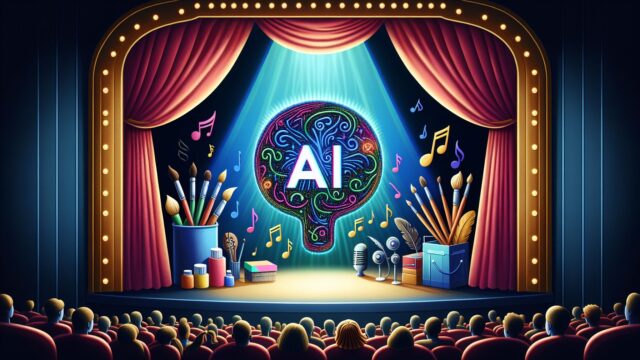
Hello, fellow tech enthusiasts! It’s another day in this rapidly changing world where technology keeps surprising us, and today, I’m genuinely excited about something that caught my attention: Artificial Intelligence making its way into creative arts. Think of this as AI stepping out of its analytical comfort zone and picking up a paintbrush, ready to collaborate with us humans in ways we never imagined.
AI: From Number Cruncher to Creative Partner
If you’d walked into an art studio ten years ago and told a group of artists that algorithms would soon be creating artwork alongside Kandinsky or stirring emotions like Van Gogh’s masterpieces, those artists probably would have laughed you out of the room. But here we are. AI has moved way beyond organizing our calendars or optimizing supply chains. These systems, once famous only for processing data, have jumped headfirst into creative expression.
Picture this: creative AI from companies like OpenAI is now producing visual art that has today’s art world talking. Some love it, others hate it, but everyone’s paying attention. These digital creations are finding their way into exhibitions, showing us new ways to understand human emotion through pixels and algorithms. It’s honestly pretty wild to witness this shift happening in real time.
How AI Actually Creates Art
Let me break down how computers are giving Monet a run for his money. AI creates art using something called Generative Adversarial Networks (GANs), which sounds intimidating but is actually pretty cool. You feed the system a text prompt, and it draws from massive databases of existing artwork to create something new. Think of it as having a digital paintbrush that’s studied millions of paintings and can now create its own interpretations.
The process isn’t perfect. Sometimes you get beautiful, thought-provoking pieces. Other times you get weird distortions that look like they came from a fever dream. But that unpredictability is part of what makes it interesting.
Beyond Digital Paintings
AI isn’t stopping at two-dimensional art either. We’re seeing artificial intelligence venture into sculpture, music composition, and even poetry. Some of these AI-generated sculptures are genuinely moving, creating forms that human artists might never have thought of. The technology is pushing boundaries in ways that make you question what creativity really means.
I’ve seen AI compositions that made me stop and think, “Did a machine really understand something about the human experience here?” It’s unsettling and fascinating at the same time. These aren’t just random combinations of existing elements. There’s something more deliberate happening, even if we don’t fully understand how.
What This Means for Human Creativity
Here’s where things get interesting, and honestly, a bit complicated. Some artists see AI as a threat to their livelihood. Others view it as a powerful new tool, like when digital cameras changed photography or when synthesizers revolutionized music. I think the reality falls somewhere in between.
AI can generate art quickly and cheaply, which could impact commercial artists and designers. But it can also inspire new forms of human creativity and collaboration. I’ve talked to artists who use AI to brainstorm ideas or create base compositions they then modify and improve. It’s becoming less about human versus machine and more about human with machine.
The Future of Creative AI
We’re still in the early days of this technology. Current AI art tools are impressive, but they’re also limited. They work with existing patterns and styles, creating variations rather than truly original concepts. But the pace of development is incredible, and I expect we’ll see major breakthroughs in the next few years.
What excites me most isn’t the technology itself, but how it’s forcing us to think differently about creativity, authorship, and what makes art meaningful. These are questions we’ll be wrestling with for years to come, and I’m curious to see where the conversation leads us.