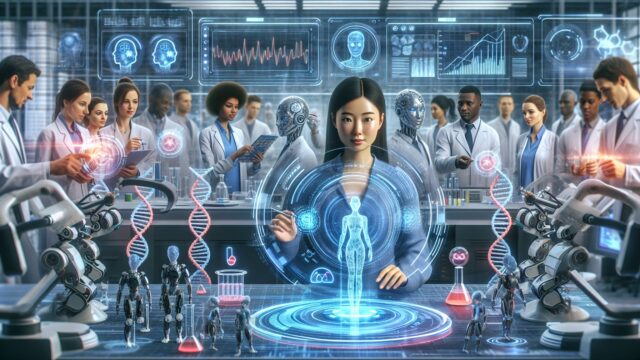
Hello fellow technophiles! Grab a coffee, maybe stretch a bit… if taking care of yourself in today’s stressful, post-COVID world even counts as self-care. Speaking of self-care, today’s hot topic is all about living longer — much, much longer — thanks to the wonders of Artificial Intelligence. Disclaimer: I am a total fanboy of worlds like those portrayed in Ex-Machina and Her. So, pardon my rose-tinted glasses!
Now, let’s dig into one of my favorite tech crossroads: AI’s fascinating dance with longevity research. Yes, we’re talking about a future where servers hum constantly, running simulations that figure out how to ethically squeeze a few more years out of the average human life.
The Golden Blend: AI Meets Longevity
Tech companies and startups blaze new trails every year. AI’s integration into medical and biotech fields has opened up possibilities that echo through research labs worldwide. Picture sophisticated algorithms unraveling the mysteries of aging, giving you personalized health advice over your morning coffee. Not the sexiest chatbot material, but pretty compelling, right?
Get excited not for distant coding jargon or abstract AI battles, but for real life extension work. Companies like Calico Labs, backed by Google, are actively working to crack death’s code (a wild thought that used to live only in science fiction).
Breaking Down the Data Revolution
Here’s where things get really interesting. AI systems like IBM Watson are running clinical trials through massive algorithmic shifts, processing genetic data in ways we never could before. We’re seeing machine learning models identify aging patterns in our DNA, predict disease onset decades in advance, and suggest interventions that might actually work.
The real magic happens when these systems start connecting dots across millions of health records. They spot correlations between lifestyle factors, genetic markers, and longevity that human researchers might miss. It’s like having a super-powered medical detective that never sleeps, never gets tired, and can process information from thousands of studies simultaneously.
The Practical Side: What This Actually Means
So what does this look like in practice? AI-powered wearables that don’t just count your steps but analyze your gait for early signs of neurological decline. Blood tests that use machine learning to predict your biological age down to the month. Personalized supplement regimens based on your specific genetic makeup and lifestyle patterns.
Some companies are already using AI to identify existing drugs that might have anti-aging properties when used in specific combinations. Others are designing entirely new compounds from scratch, using AI to predict how molecules will behave in human cells before they ever touch a test tube.
The pace of discovery is honestly a bit overwhelming. Every month brings new studies showing how AI spotted another piece of the aging puzzle. But here’s the thing — we’re still years away from the dramatic life extension breakthroughs that grab headlines. The real progress is happening in smaller, incremental improvements that add up over time.